Quirky Vintage Cards for Junk Journals
In the world of digital creation, there is a distinct shift occurring where the most valuable assets are those that bridge the gap between historical charm and modern utility. This is particularly true for the growing community of junk journal enthusiasts, scrapbookers, and mixed-media artists who seek authenticity in their creative outputs. At the heart of this movement is the concept of Quirky Vintage Cards for Junk Journals, a resource that does not merely provide images but offers a tactile connection to a bygone era of printing history.
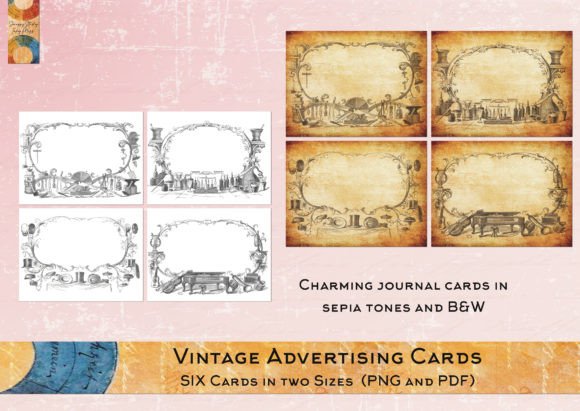
The appeal of these cards lies in their origin story. Back in the day, specifically during the 1800s, printers published books filled with samples of their fonts and decorative elements. These were not just dry catalogs; they were playful showcases. Printers had a sense of humor, often including quirky bits of text or funny drawings within these sample books. They served as templates for advertising or business cards that one could purchase, leaving space in the middle to print one’s own business information. Today, we recognize these artifacts as charming, versatile tools. They offer plenty of space to write on or to build upon as a base for a cluster, making them ideal for contemporary craft projects.
The Evolution of Analog Aesthetics in Digital Workflows
Why are people paying attention to 19th-century printer samples now? The answer lies in the desire for tangibility in an increasingly virtual world. As professionals, educators, and hobbyists spend more time behind screens, there is a counter-movement toward "slow creativity." Junk journals, which emphasize layering, texture, and personal narrative over pristine perfection, have become a popular outlet for this need.
Modern users expect resources that are adaptable. A static image is no longer enough; creators need files that can be integrated into their existing workflows. This is where high-resolution digital reproductions of vintage ephemera shine. By providing files that can be printed at home or edited digitally, these resources allow users to maintain control over their materials. Whether you are a marketer looking to add a retro flair to a presentation, a blogger designing a themed post, or a teacher creating engaging classroom materials, having access to authentic-looking vintage designs saves time while elevating the visual quality of your work.
Design Elements and Subject Matter
The specific collection known as Quirky Vintage Cards for Junk Journals stands out due to its diverse subject matter. It moves beyond generic floral patterns to include themes that tell stories:
- Apothecary Tools: Evoking a sense of mystery and old-world medicine, perfect for fantasy-themed journals or historical research notes.
- Fish: Adding a touch of nature and whimsy, suitable for eco-conscious themes or casual sketching.
- Game: Incorporating elements of play and strategy, ideal for interactive journaling prompts.
- Hats: Reflecting fashion history and social status, great for character studies or costume design inspiration.
- Music: Featuring instruments and scores, appealing to musicians and composers looking for background textures.
- Food: Depicting culinary delights, which can serve as bases for recipe collections or travel logs.
Each card is designed with a central blank space, mimicking the original purpose of these 1800s business cards. This intentional negative space invites interaction. You might write a quote, paste a photograph, or simply leave it as a textured background for a watercolor wash. The versatility of these subjects ensures that there is something for every type of creator, from the serious historian to the whimsical doodler.
Technical Specifications and Usability
For the resource to be truly useful, it must meet modern technical standards. This digital product is designed with practicality in mind, ensuring that users can integrate it seamlessly into their routines. The package includes two printable sheets of cards in two distinct sizes: 5 x 3.75 inches and 2 x 2.66 inches. This variety allows for different layout possibilities, whether you are creating large focal points or small, detailed accents.
The set features two aesthetic variations: one that captures the full color of the original vintage prints and another in black and white. The black-and-white option is particularly valuable for artists who prefer to add their own color palettes or for those using monochrome printers. The sheets are formatted for both US Letter (8.5 x 11 inch) and A4 paper. For A4 users, it is recommended to print borderless if possible to maximize the use of the card space, though standard margins will still yield usable results.
File accessibility is crucial for professional and semi-professional users. Therefore, the files are provided in both PNG format and as a PDF. The PDF format allows for easy extraction of individual cards, which can then be resized or edited using common software. The PNG files offer high-resolution raster images that are ready to drop into design programs without loss of quality. Both formats ensure compatibility with a wide range of devices and editing tools, from simple photo viewers to advanced graphic design suites.
Practical Applications for Creators and Professionals
The utility of these cards extends far beyond traditional junk journaling. Consider the following applications:
- Content Creation: Bloggers and social media influencers can use these cards as backgrounds for quotes or announcements. The vintage aesthetic adds depth and personality to digital posts, helping content stand out in crowded feeds.
- Education: Teachers can print these cards to create historical role-play items. Students studying the 1800s can hold "business cards" from fictional apothecaries or hat makers, fostering engagement through tactile learning.
- Small Business Branding: Entrepreneurs with a vintage or artisanal brand identity can use these designs as inspiration for packaging labels, thank-you notes, or promotional flyers. The built-in space for text makes them nearly ready-to-use templates.
- Personal Organization: Freelancers and planners can use the smaller 2 x 2.66 inch cards as bookmarks or page markers. Their sturdy appearance and charming designs make daily planning tasks more enjoyable.
Implementation Tips
To get the best results from this digital download, consider the following tips. First, ensure you have software capable of unzipping folders if the file does not extract automatically upon download. Most operating systems handle this natively, but free online unzipper tools are available if needed. Second, when printing, test a single sheet first to check alignment and color accuracy. If you are aiming for a specific look, adjusting the brightness and contrast in your editing software before printing can help achieve the desired vintage fade.
Furthermore, do not limit yourself to paper. These high-resolution images can be transferred onto wood slices, canvas panels, or even fabric using transfer techniques. The flexibility of the PNG and PDF formats encourages experimentation. You might resize a fish card to fit perfectly into a digital planner template or combine multiple card elements to create a complex collage piece.
Conclusion
The resurgence of interest in vintage aesthetics is not just a passing trend; it reflects a deeper human desire for connection to history and craftsmanship. Quirky Vintage Cards for Junk Journals taps into this sentiment by providing accessible, high-quality resources that honor the past while serving modern needs. Whether you are adding a touch of nostalgia to a personal diary or enhancing a professional project with unique visuals, these cards offer a charming and practical solution. By combining historical accuracy with digital convenience, this product empowers creators to express themselves authentically, proving that some things from the 1800s are timeless.