Red Flower Pattern: A Versatile Design Element for Creative Projects
Visual design is often the first thing people notice, even before they read a single word. When you are creating something—whether it’s a wedding invitation, a small business logo, or a personal planner—you need elements that convey emotion and style instantly. This is where a red flower pattern comes into play. It is more than just a decorative image; it is a tool that can elevate the aesthetic of your project, adding warmth, passion, and a touch of organic elegance.
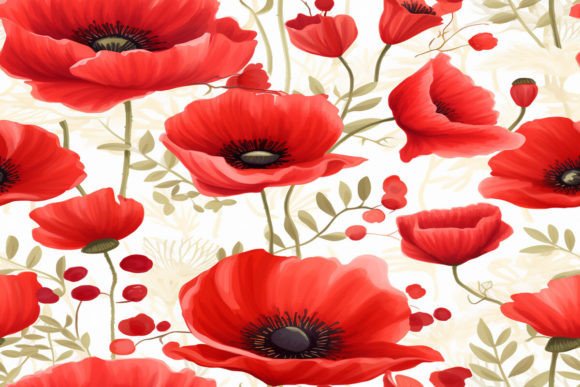
In the digital age, having access to high-quality, versatile design assets is crucial. One specific asset that has gained popularity among creators and hobbyists alike is the watercolor red flower pattern. Unlike rigid, geometric designs, watercolor patterns offer soft edges, subtle color variations, and a hand-painted feel that feels authentic and inviting. If you have stumbled upon a set containing one digital paper featuring this motif, sized at 1200 × 800 pixels in JPG format at 300 dpi, you might be wondering how to best utilize it. The answer lies in understanding its versatility across various personal and professional landscapes.
The Appeal of Watercolor Red Flowers
Why choose a watercolor style over a solid vector graphic? The primary reason is texture and depth. Watercolor art mimics the way pigment interacts with paper, creating gradients and blooms that feel natural. A red flower pattern in this style avoids looking flat or artificial. Instead, it brings a sense of movement and life to whatever surface it adorns.
The color red itself carries significant weight. In design psychology, red is associated with energy, love, urgency, and attention. However, when rendered in soft watercolors, the intensity is tempered by the medium's inherent fluidity. This makes it suitable for contexts where you want to capture attention without being overwhelming. It strikes a balance between boldness and delicacy, making it appropriate for everything from romantic invitations to modern corporate branding materials.
Personal Creative Applications
For hobbyists and crafters, the applications of a 1200 × 800 pixel watercolor red flower pattern are virtually endless. Let’s look at some realistic scenarios where this specific asset shines.
Planner Stickers and Digital Planning
Digital planning has exploded in popularity, with users migrating from paper notebooks to apps like GoodNotes or Notability. A 300 dpi JPG is perfect for printing physical stickers or importing as a digital overlay. Because the resolution is high, the edges remain crisp even when cropped into smaller sticker shapes. Imagine creating a series of "self-care" or "celebration" stickers using just the floral elements from this pattern. The watercolor texture adds a premium feel that generic clipart simply cannot match.
Scrapbooking and Photo Albums
If you are documenting family memories, a plain white background can sometimes feel sterile. Integrating a red flower pattern as a border or a full-page background can frame your photos beautifully. The 1200 × 800 aspect ratio is close to standard photo dimensions, allowing you to use the entire image as a backdrop for group shots or landscape photos. The red tones can complement skin tones and outdoor settings, tying the visual narrative together.
DIY Home Decor and Crafts
Small business owners who create handmade goods can leverage this pattern for product packaging or marketing materials. For instance, if you sell candles or bath bombs, printing this pattern on tissue paper or gift tags adds a layer of perceived value. The watercolor aesthetic suggests artisanal quality, which appeals to customers looking for unique, thoughtful gifts.
Professional and Business Uses
Entrepreneurs and marketers often overlook the power of simple pattern assets, but they can be incredibly effective when used strategically. Here is how professionals can integrate a red flower pattern into their workflow.
Invitations and Event Graphics
Weddings, baby showers, and birthday parties all rely heavily on thematic consistency. A watercolor red flower pattern is ideal for event stationery sets. You can use the same pattern on save-the-dates, menus, and place cards to create a cohesive look. The 300 dpi resolution ensures that when these files are sent to a professional printer, the results will be sharp and vibrant, avoiding any pixelation that could detract from the event's elegance.
Web Design and Social Media
Bloggers and content creators need fresh visuals to keep their audiences engaged. While a full-screen background might be too busy for a blog post, using the red flower pattern as a header image, sidebar accent, or featured graphic can break up text-heavy layouts. It adds a pop of color that draws the eye without distracting from the core message. Furthermore, because it is a JPG file, it loads quickly on websites, contributing to better user experience and potentially improved SEO performance through faster page speeds.
Business Cards and Letterheads
For creative industries such as floristry, cosmetics, or lifestyle coaching, a standard black-and-white business card might not stand out. Incorporating a subtle watercolor red flower pattern as a watermark or background element can reinforce brand identity. It signals creativity and attention to detail. Just ensure that the text remains legible by placing it over a lighter area of the pattern or adding a semi-transparent white box behind the typography.
Technical Considerations for Best Results
While the asset described—a 1200 × 800 pixel, 300 dpi JPG—is high quality, there are practical steps you should take to get the most out of it. Understanding the technical limitations helps avoid frustration during the design process.
- Resolution and Scaling: At 300 dpi, the image is print-ready. However, if you attempt to scale it up significantly larger than its original dimensions, you may notice a loss of clarity. For large-format prints like banners, consider sourcing a vector version if available. For most uses, including A4 letterheads and Instagram posts, this resolution is more than sufficient.
- Color Profiles: JPG files typically use the RGB color profile, which is ideal for screens. If you plan to print the pattern for physical products, remember that printers use CMYK. While many modern printers handle RGB-to-CMYK conversion well, colors may appear slightly duller in print than on screen. Always do a test print if color accuracy is critical.
- File Format Flexibility: Since the asset is provided as a JPG, it lacks transparency. This means you cannot easily place the flowers over other images without seeing a white box around them. To work around this, you can use editing software to remove the background manually or design your layout so that the pattern sits within defined boundaries, such as frames or borders.
Choosing the Right Pattern for Your Needs
Not every red flower pattern fits every project. Before downloading or purchasing a set, ask yourself what emotional tone you want to convey. A dark, blood-red watercolor might suit a gothic-themed party or a dramatic editorial layout, while a soft, pinkish-red wash might be better for a spring wedding or a children’s book.
Additionally, consider the density of the pattern. Some watercolor designs are sparse, leaving plenty of negative space for text. Others are dense, covering the entire canvas with blooms. A dense pattern works well for backgrounds, while a sparse one is better for accents. The 1200 × 800 dimension offers a good middle ground, providing enough detail to be interesting without becoming chaotic.
Final Thoughts on Integration
The true value of a red flower pattern lies in its adaptability. It bridges the gap between traditional craftsmanship and modern digital convenience. Whether you are a freelancer designing a client’s brand kit, a teacher creating engaging classroom materials, or a parent preserving family memories, this asset offers a ready-made solution for enhancing visual appeal.
By focusing on the practical aspects of usage—such as resolution suitability, color psychology, and contextual application—you can move beyond simply using a pretty picture to actively leveraging design principles to communicate your message more effectively. Take the time to experiment with different layouts, combine the pattern with complementary fonts, and observe how the red hues interact with your other design elements. With a little creativity, a simple watercolor red flower pattern can become the centerpiece of your next successful project.